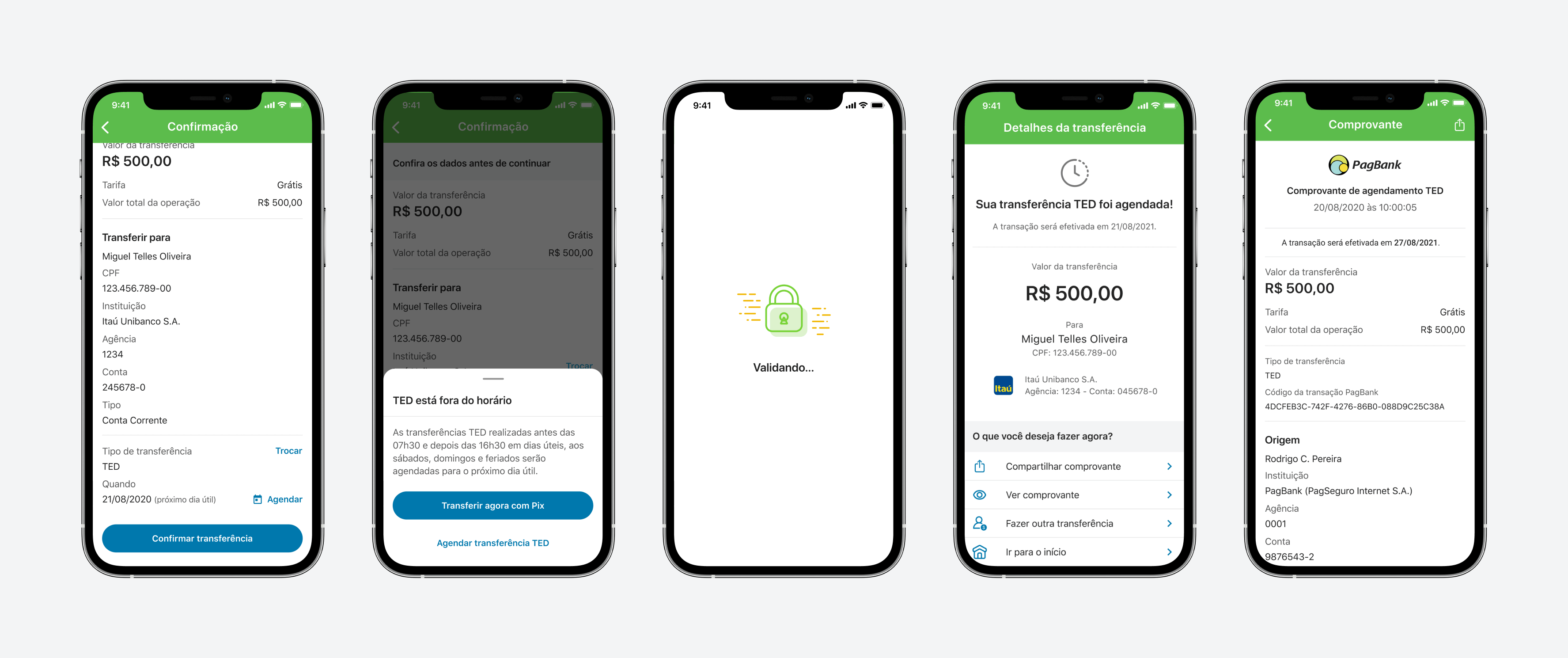
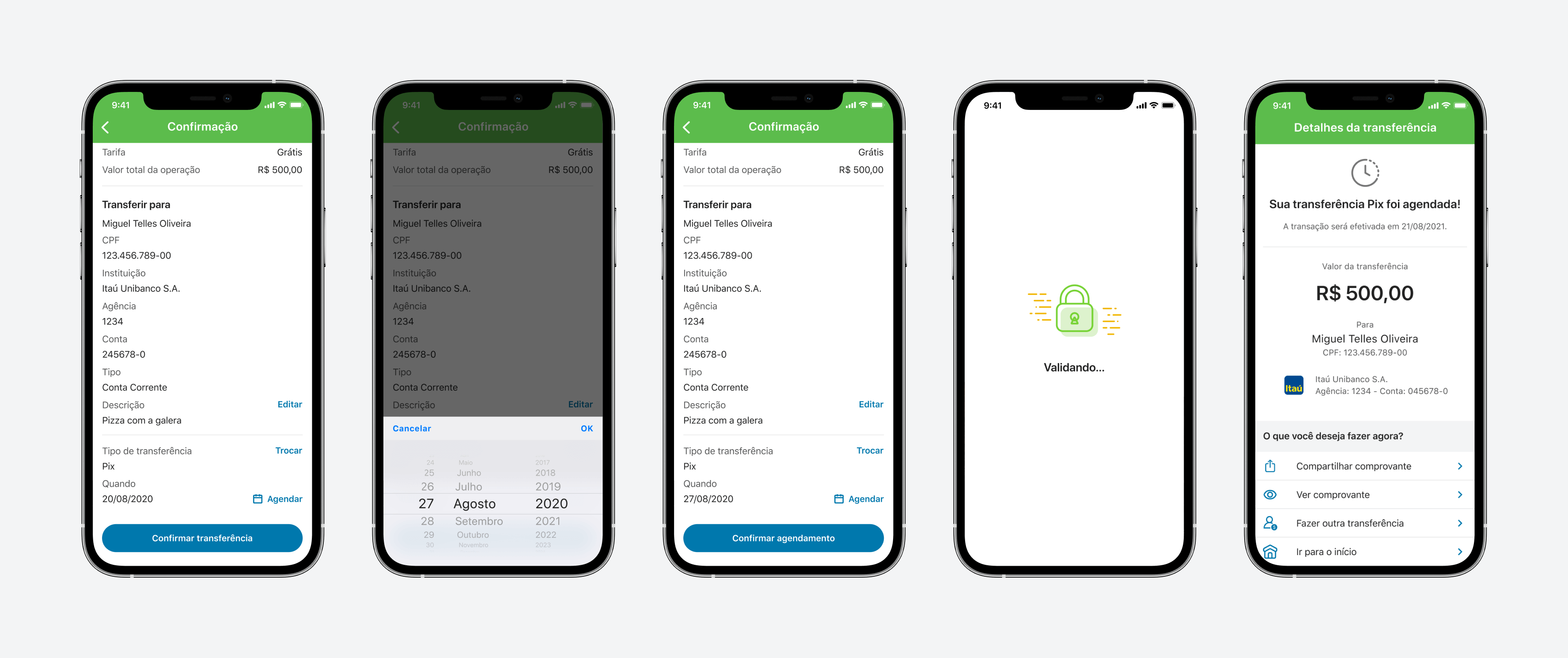
Overview – Transfer with Pix Key
About PagBank app
PagBank is a Brazilian digital bank with over 21 million active users and a full ecosystem of financial services.
This project took place during a major shift in the market. Just a few months after Pix was launched by the Central Bank, user behavior around transfers was already changing fast and the product needed to keep up without adding more complexity.
Context
As Pix gained traction, users started adopting it as a faster and simpler alternative to TED. However, inside the app, both experiences still existed as separate flows.
In practice, this created a fragmented journey.
Users had to decide before starting which type of transfer to use, even if they didn’t fully understand the difference.
On top of that, new concepts introduced by Pix, like Pix keys, weren’t fully integrated into the existing experience.
This wasn’t just a UI issue, it was a mental model problem.
My role
I worked as the UX Designer responsible for improving the transfer experience, from early discovery to validation.
Throughout the project, I was involved in:
- Research and data analysis
- Defining the unification strategy
- Building flows and information architecture
- Facilitating sessions with product and engineering
- Prototyping and usability testing
I also played a key role connecting different teams, especially when the ideal UX solution conflicted with technical constraints.
The challenge
This wasn’t just about merging two flows.
It was about reconciling two different ways of thinking about money transfers.
On one side:
- TED → based on bank account details, with operational constraints.
On the other:
- Pix → faster, simpler, built on new behaviors.
The core question became:
How do we simplify the experience without forcing users to understand all this complexity?
All while dealing with:
- Real technical limitations.
- Central Bank regulations.
- The need to promote Pix adoption.
- The risk of introducing ambiguity in the interface.
Goals
The main focus was clear: reduce friction and increase Pix adoption.
Key goals included:
- Unify Pix and TED transfer flows.
- Increase Pix usage.
- Improve conversion rates.
- Reduce user confusion and errors.
- Minimize issues related to scheduled TED transfers.
Process
Understanding real user behavior
Before jumping into solutions, I focused on understanding how people were actually using transfers.
I combined:
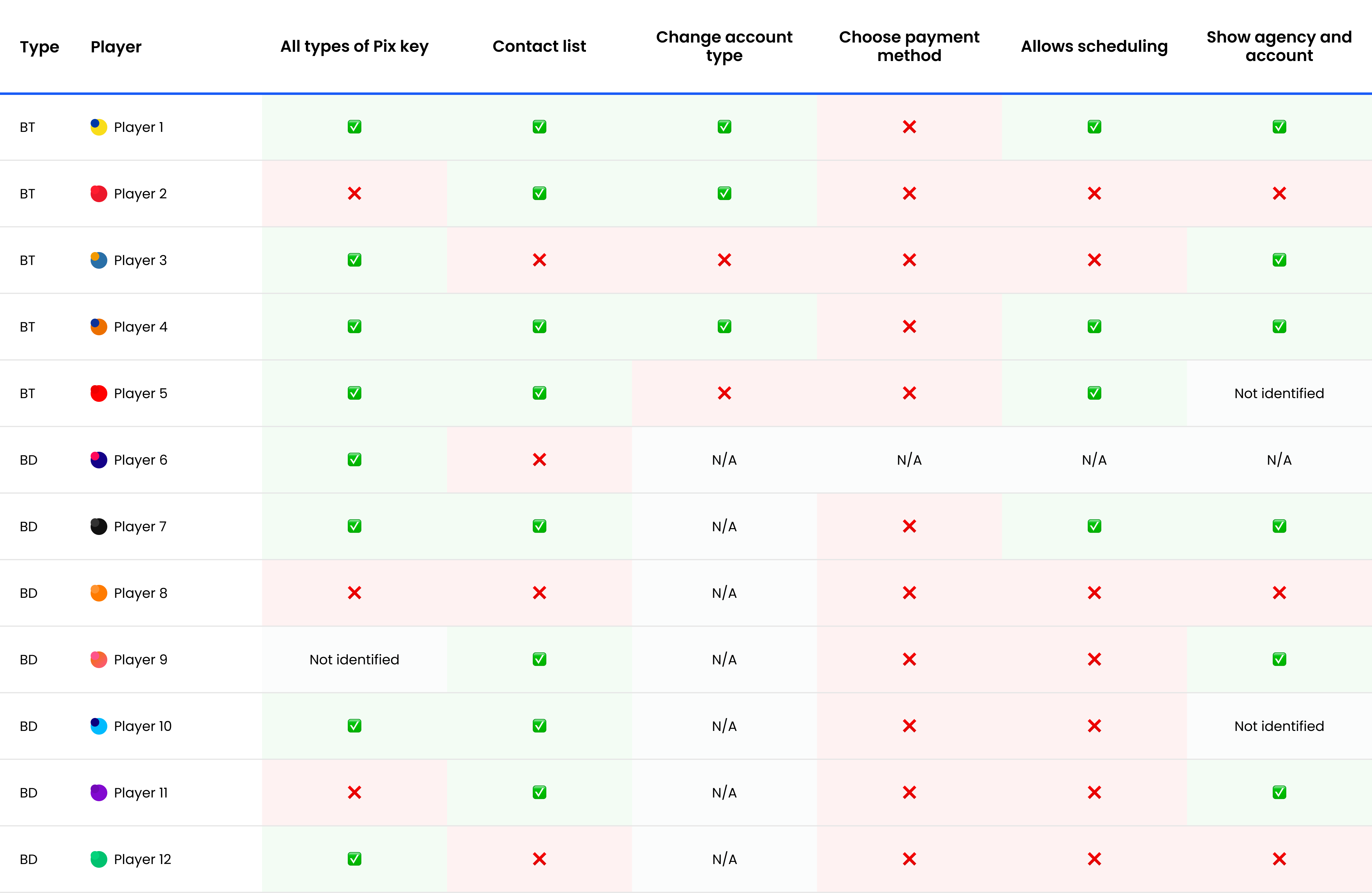
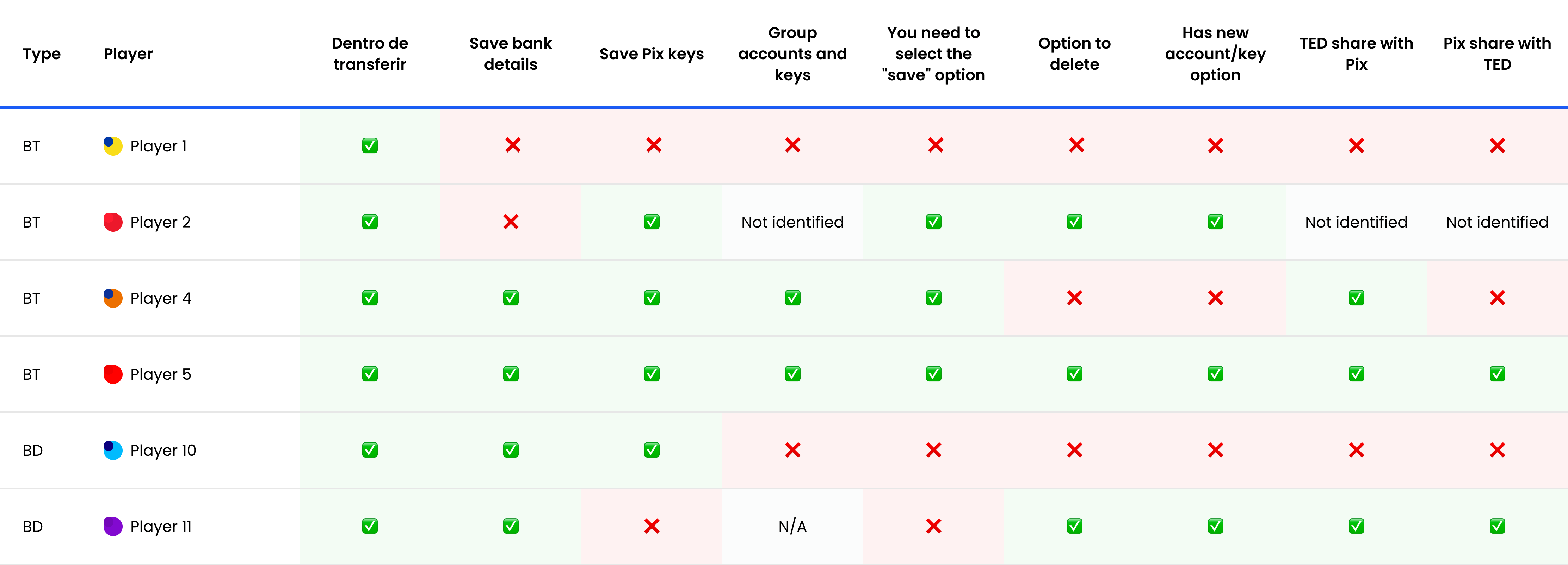
- Market benchmarks
- User research
- Internal data analysis
A few things stood out:
- Pix already represented a significant portion of usage, even early on.
- 88.4% of Pix transfers were made using Pix keys.
- Many users didn’t know Pix could also use bank account details.
- There was confusion around how receiving transfers worked.
This shifted how we framed the problem.
Users weren’t making the wrong choice, they didn’t have enough clarity to decide.

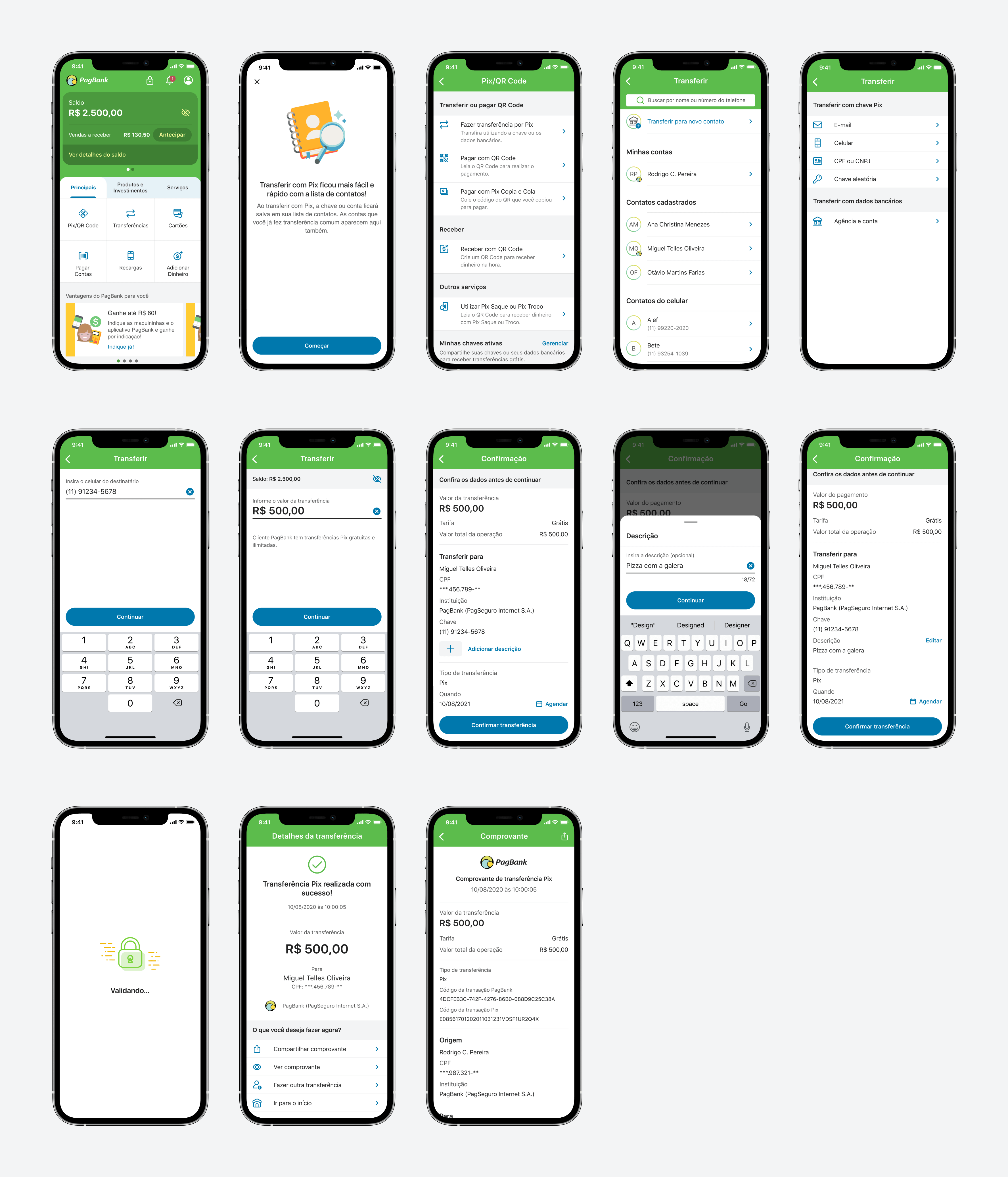
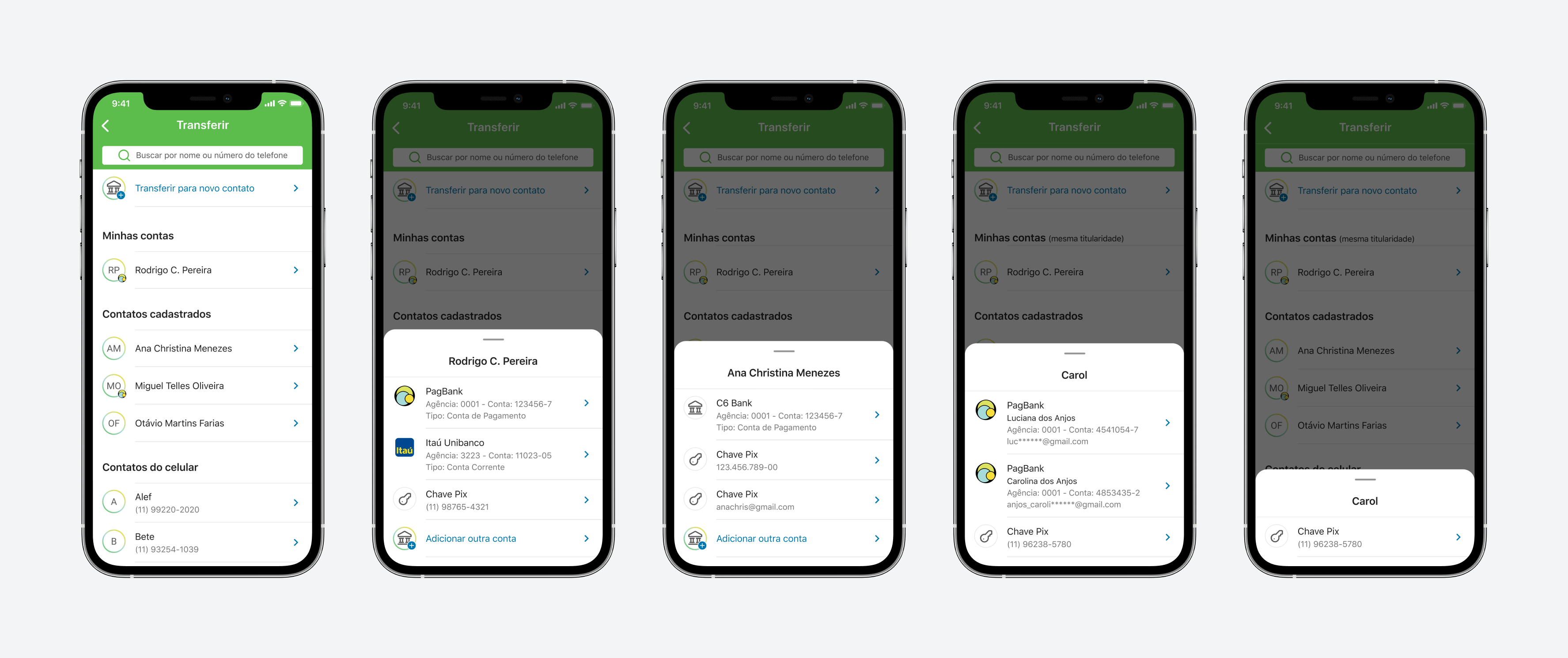
Overview – List of contacts on transfer
Rethinking the experience logic
Based on these insights, keeping two separate flows no longer made sense.
So we shifted the approach:
- Stop asking “which type of transfer do you want to make?”
- Start asking “who do you want to send money to?”
From there, the system would determine the best path.
It sounds simple, but it wasn’t.
The tension with engineering
This was one of the most important moments in the project.
From a UX perspective, unifying the experience made sense. But engineering raised a valid concern: Pix and TED were built on different architectures, with different rules and dependencies.
Simplifying the interface could mean increasing system complexity behind the scenes.
This created tension.
Instead of pushing for an “ideal” solution, we worked together to find a balance between:
- User clarity
- Technical feasibility
- Long-term maintainability
That alignment was key to making the solution viable.
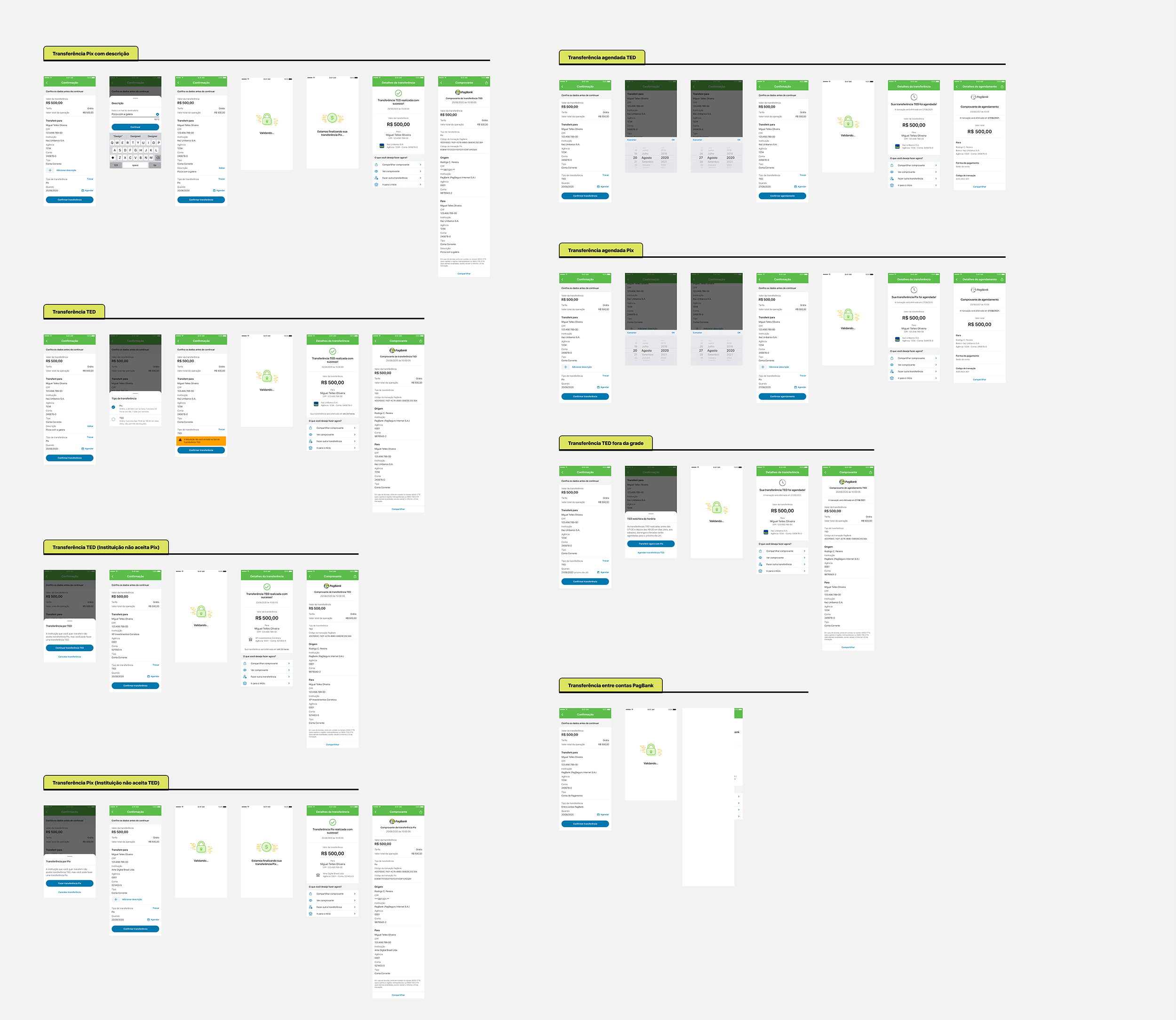
Exploring scenarios before simplifying
During prototyping, I intentionally avoided jumping straight into the “final” solution.
Instead, I mapped out as many scenarios as possible:
- Pix key transfers
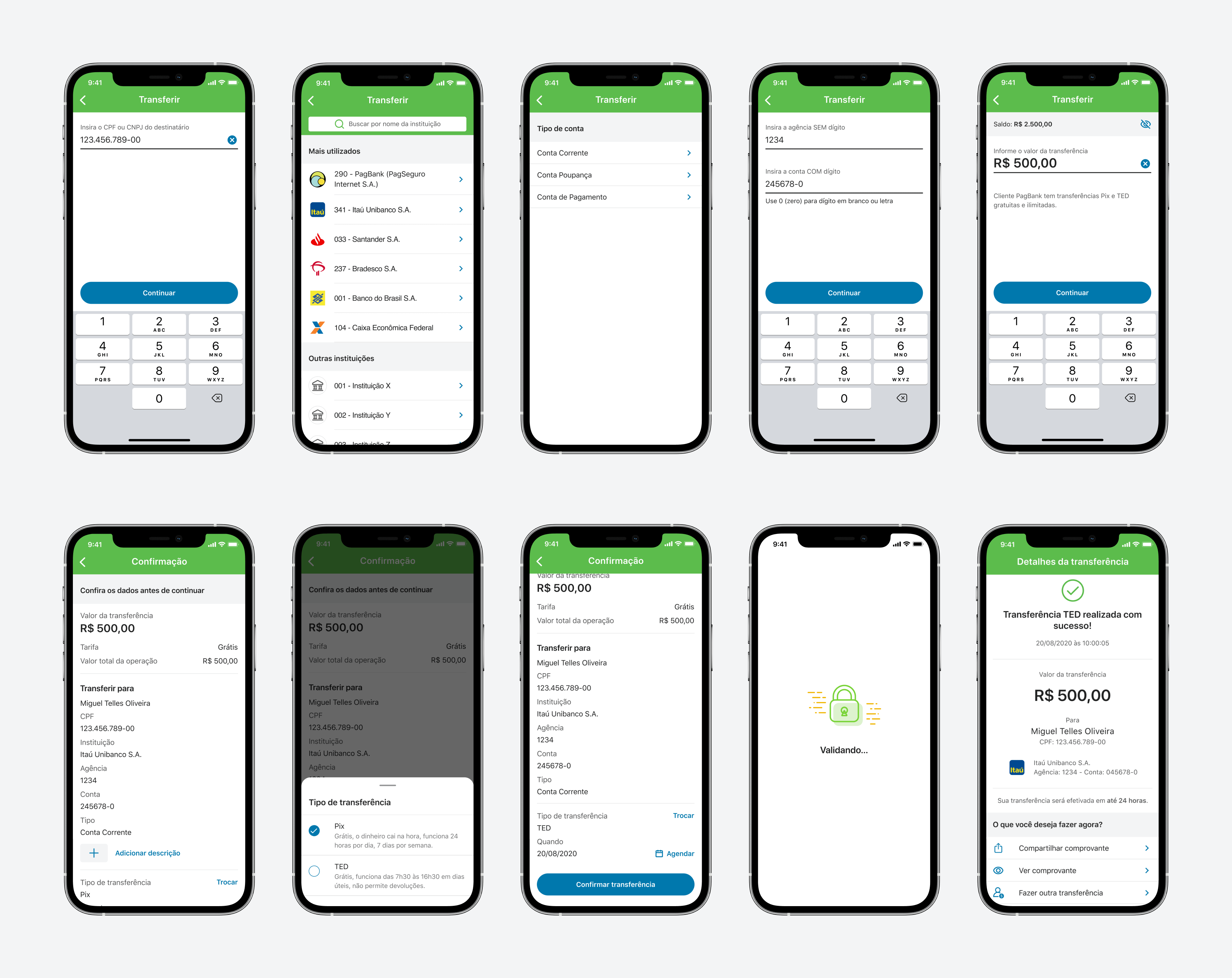
- Bank account transfers
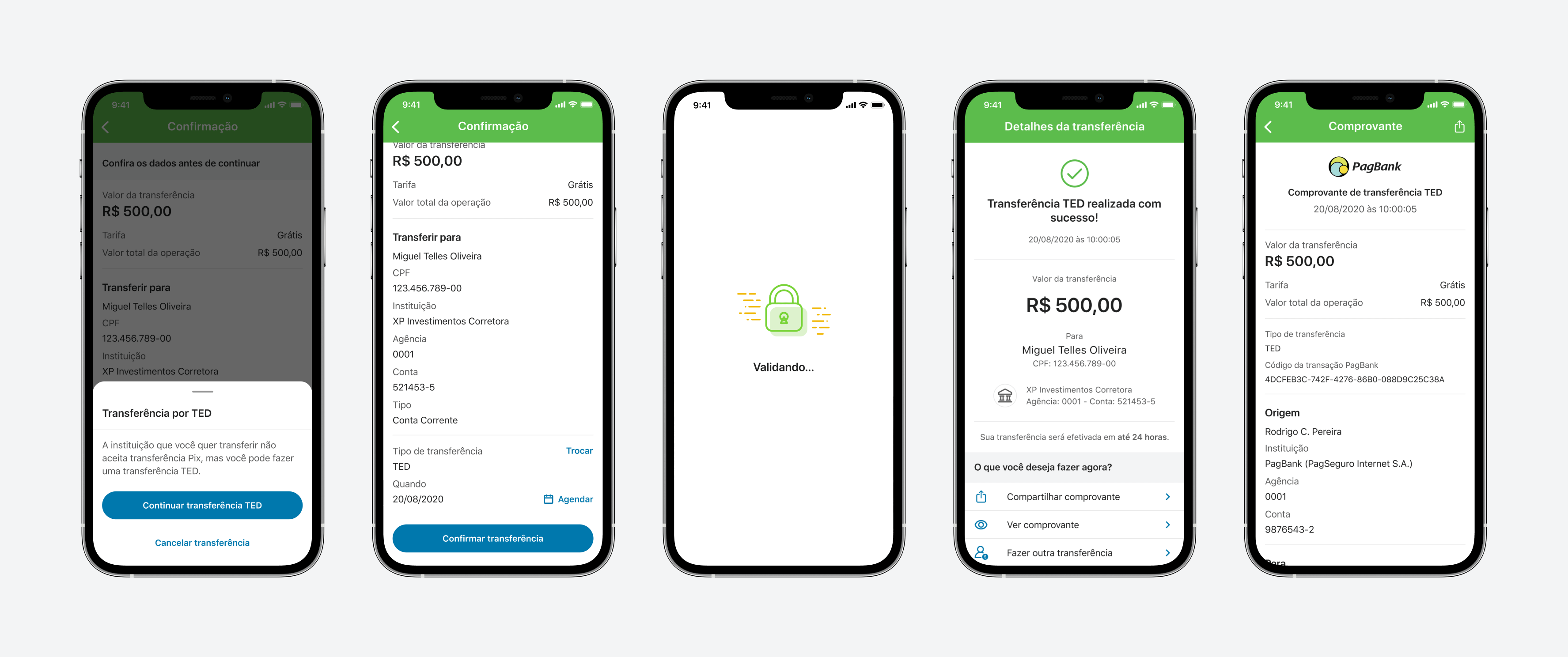
- Institutions with different capabilities
- Scheduling
- Edge cases
- Empty states
The idea was simple:
it’s better to deal with complexity early than discover gaps later.
Only after that did I start refining the experience.
high-fidelity prototypes
User validation
With more refined prototypes, I ran remote usability tests with 7 participants.
The goal was to understand:
- How users interpreted the flow.
- Whether they could complete tasks confidently.
- Where friction still existed.
One insight stood out:
Removing the need to choose the transfer type significantly reduced uncertainty.
The solution
The final solution restructured the transfer experience around a simpler, more intuitive logic.
Key changes:
- A unified flow for Pix and TED.
- Entry point based on the recipient.
- Integrated contact list.
- Adaptive logic behind the scenes.
- Consistent handling of edge cases.
In practice, users no longer needed to understand how the system works to complete a transfer.
Results
The rollout was done in phases, in close collaboration with engineering.
Within the first two months:
- Pix became the most accessed menu in the app
- +72.8% increase in Pix menu access
- +374.4% growth in account-based transfers
- improved app store ratings
More than just metrics, this reflected a behavioral shift.
Simplifying the experience didn’t just reduce friction, it helped users adopt Pix more naturally.
Learnings
A few key takeaways from this project:
- Simplifying the experience often shifts complexity to the system.
- Users don’t think in terms of system structures, they think in terms of tasks.
- Structural decisions require real alignment across UX, engineering, and business.
- Exploring edge cases early prevents costly rework later.