
Mercado Pago is the financial arm of Mercado Libre and one of the largest fintech companies in Latin America.
With millions of active sellers and a portfolio of Android-based Smart POS devices, Smart is more than a payment terminal, it’s a business management platform that connects payments, reporting, services, and third-party integrations within a unified ecosystem.
The Launcher sits at the core of that evolution.

Point Smart operated under a monolithic architecture, every feature, payments, reports, cost simulation, services, and settings lived inside a single application. Any update required a full release, creating cross-team dependencies, recurring delays, and increased risk of regressions.
From a technical perspective, the problem was clear.
From a user experience perspective, the impact was more subtle, but just as critical.
The calculator was the home interface. High-value features such as sales reports, transaction history, cost simulation, and services were buried in secondary layers. Navigation required multiple taps, and performance perception began to erode trust in the device.
This was not simply a UI problem.
It was structural.
We needed to evolve Point Smart from a “payment app with extras” into a modular business platform.
I led the strategic UX direction for Launcher, aligning product vision, technical feasibility, and real seller behavior.
My responsibilities included:
The project spanned over 12 months, underwent major structural pivots, and required high-impact decision-making across disciplines.
How to fragment the experience without losing its unity?
We needed to reduce release risk, accelerate technical evolution, and introduce modularity, while maintaining a simple, secure, and reliable experience for a highly heterogeneous audience, from experienced sellers to first-time device operators.
All of this within hardware performance constraints and aggressive timelines.
Defining the MVP required negotiation with Engineering, clearly distinguishing what was foundational versus what could be iterated post-launch.
Business
Increase competitiveness among larger sellers and strengthen market positioning against competitors.
UX
Improve discoverability of critical actions (charging customers, managing products, viewing reports), reduce friction, and enable a more flexible, app-based experience.
Engineering
Break the monolith into independent applications to reduce release risk and accelerate time-to-market.
We followed a structured, hypothesis-driven process built on continuous validation and iteration.
We began by mapping two primary dimensions:
From this, we defined core hypotheses:
This phase was critical to align UX, Product, and Engineering around a shared problem, not just a visual redesign.
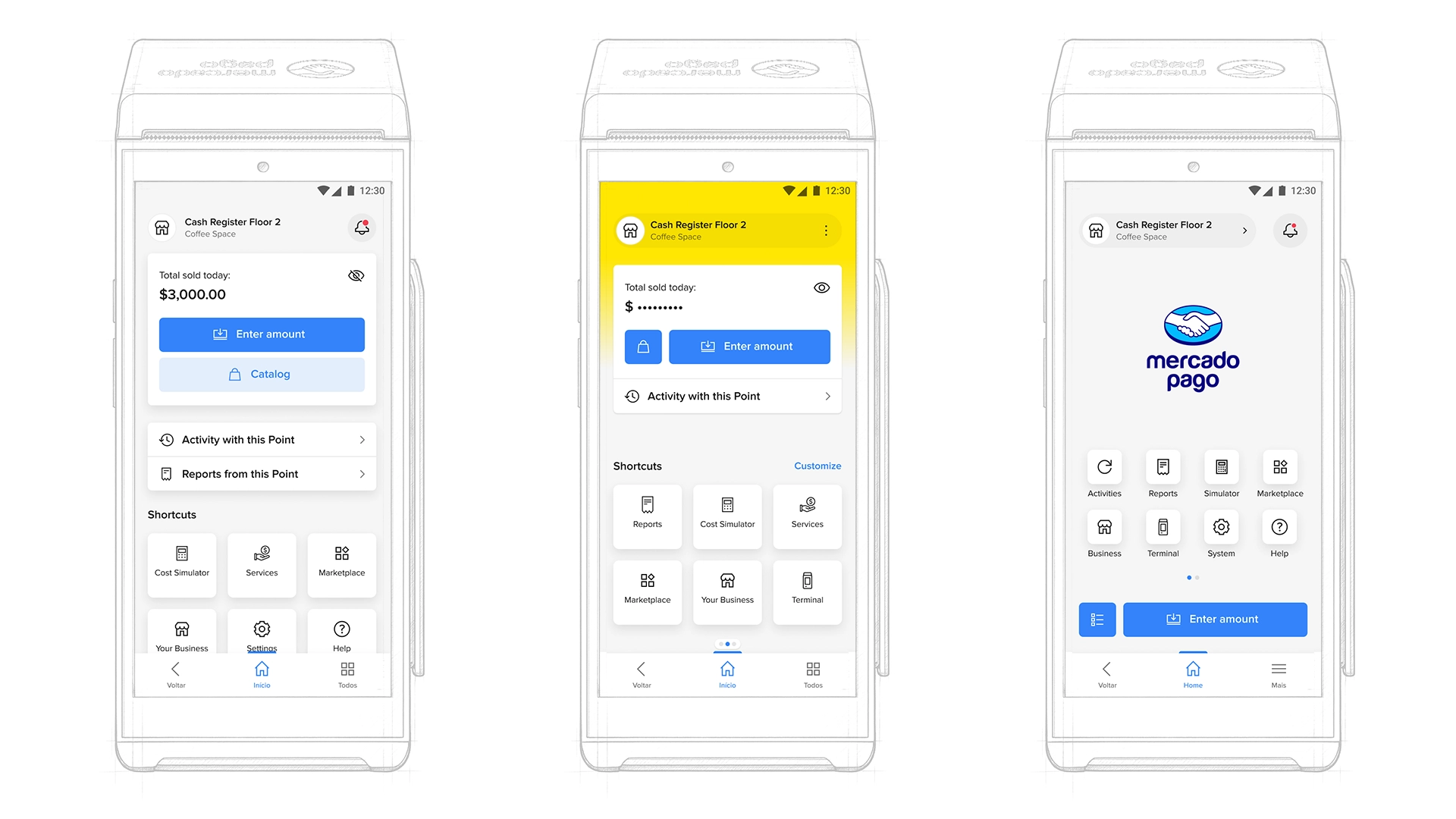
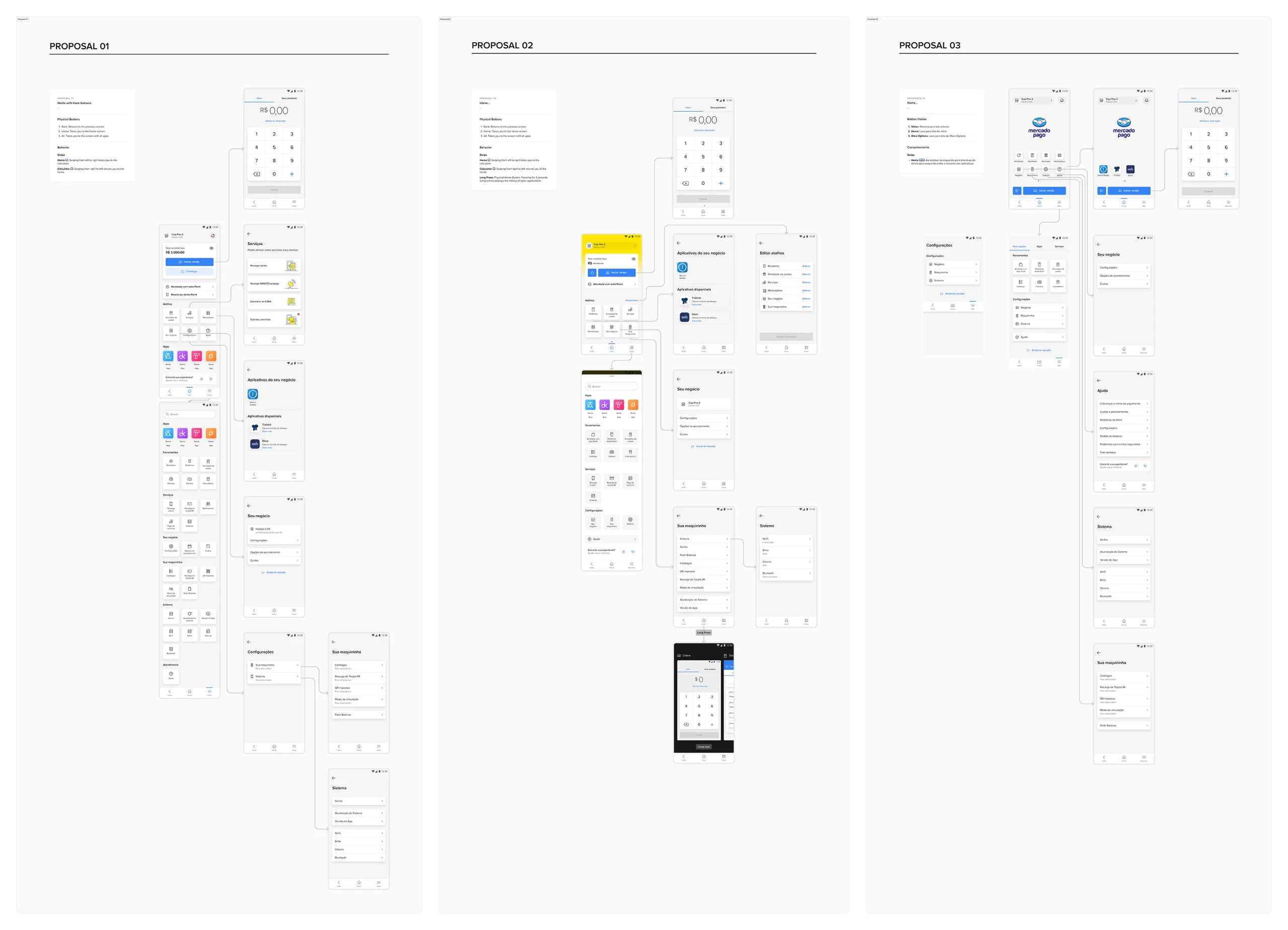
Before fully committing to modular architecture, we built a functional proof of concept (POC).
The goal was to validate whether sellers understood the Launcher concept and could complete essential tasks without efficiency loss.
The POC validated the concept, but revealed architectural maturity gaps.
During the transition to V1, we encountered a major inflection point. After months of development and internal validation, the release was canceled right before handoff.
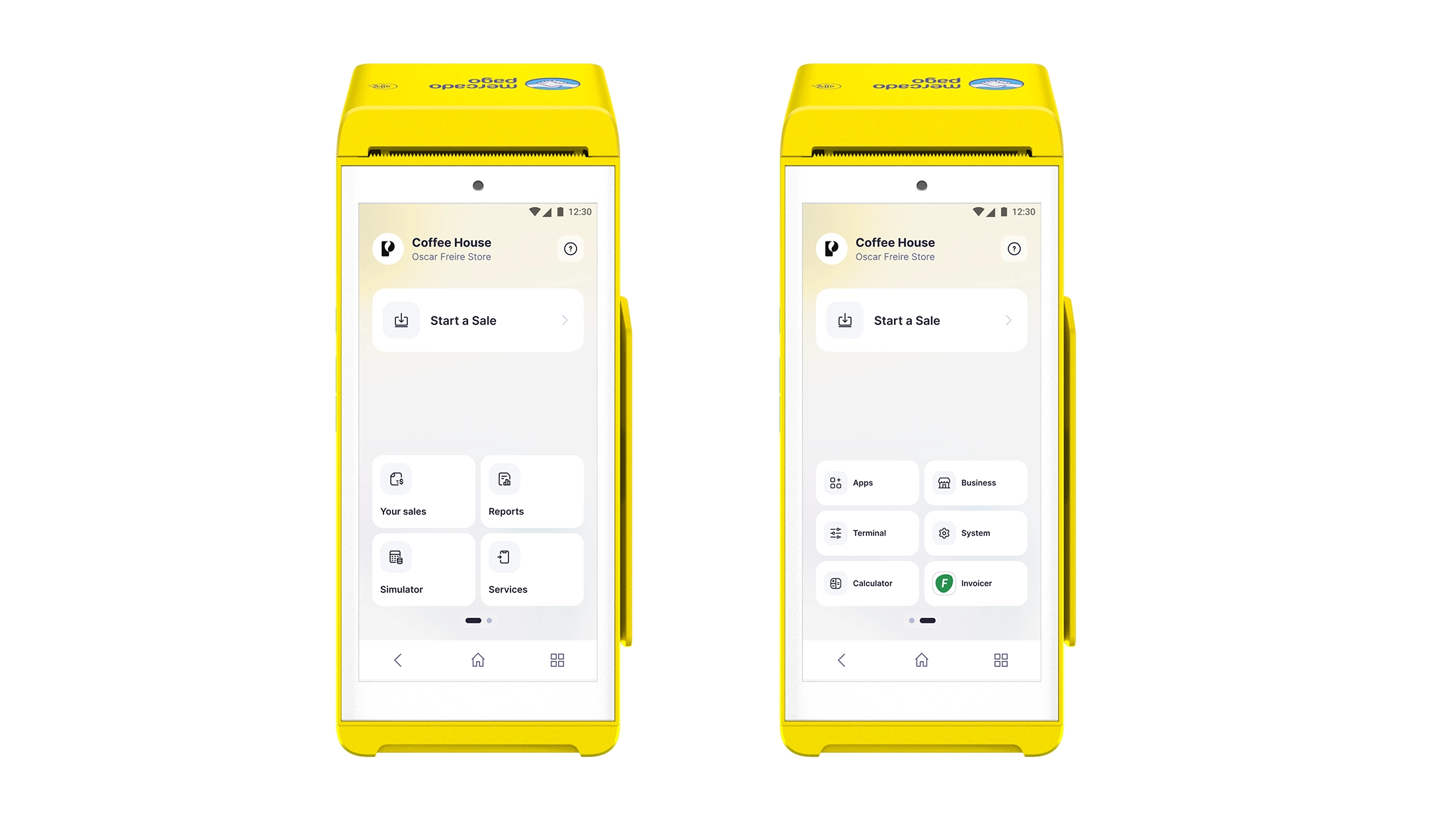
The new strategic directive required simplification, think like a smartphone. Increase tap targets. Reduce density. Prioritize grid.
We returned to exploration.
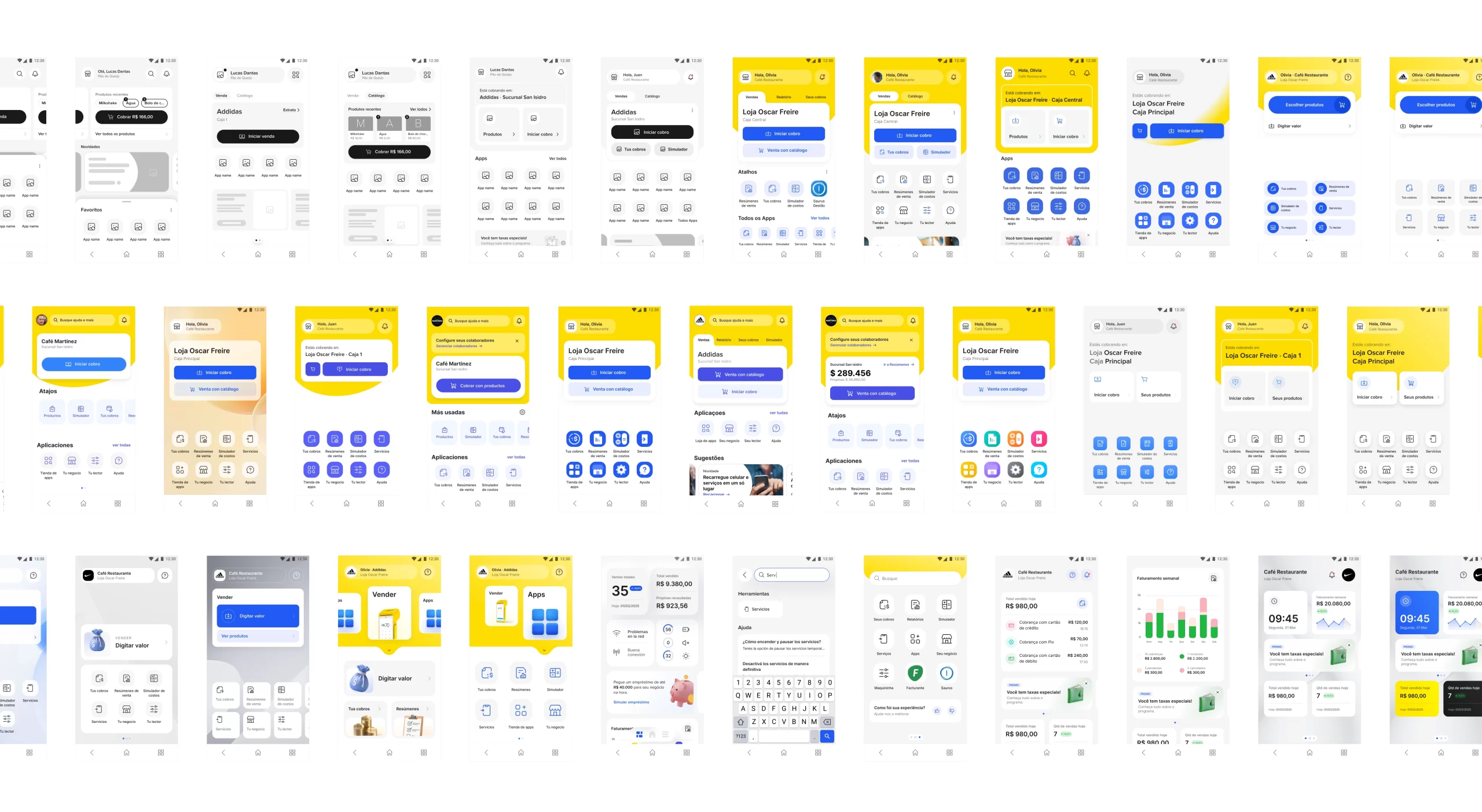
We explored extensive variations in hierarchy, modules, grid systems, and terminology. This stage was less about aesthetics and more about cognitive clarity, ensuring readability at a distance, reducing cognitive load, and maintaining alignment with our design system and product goals.
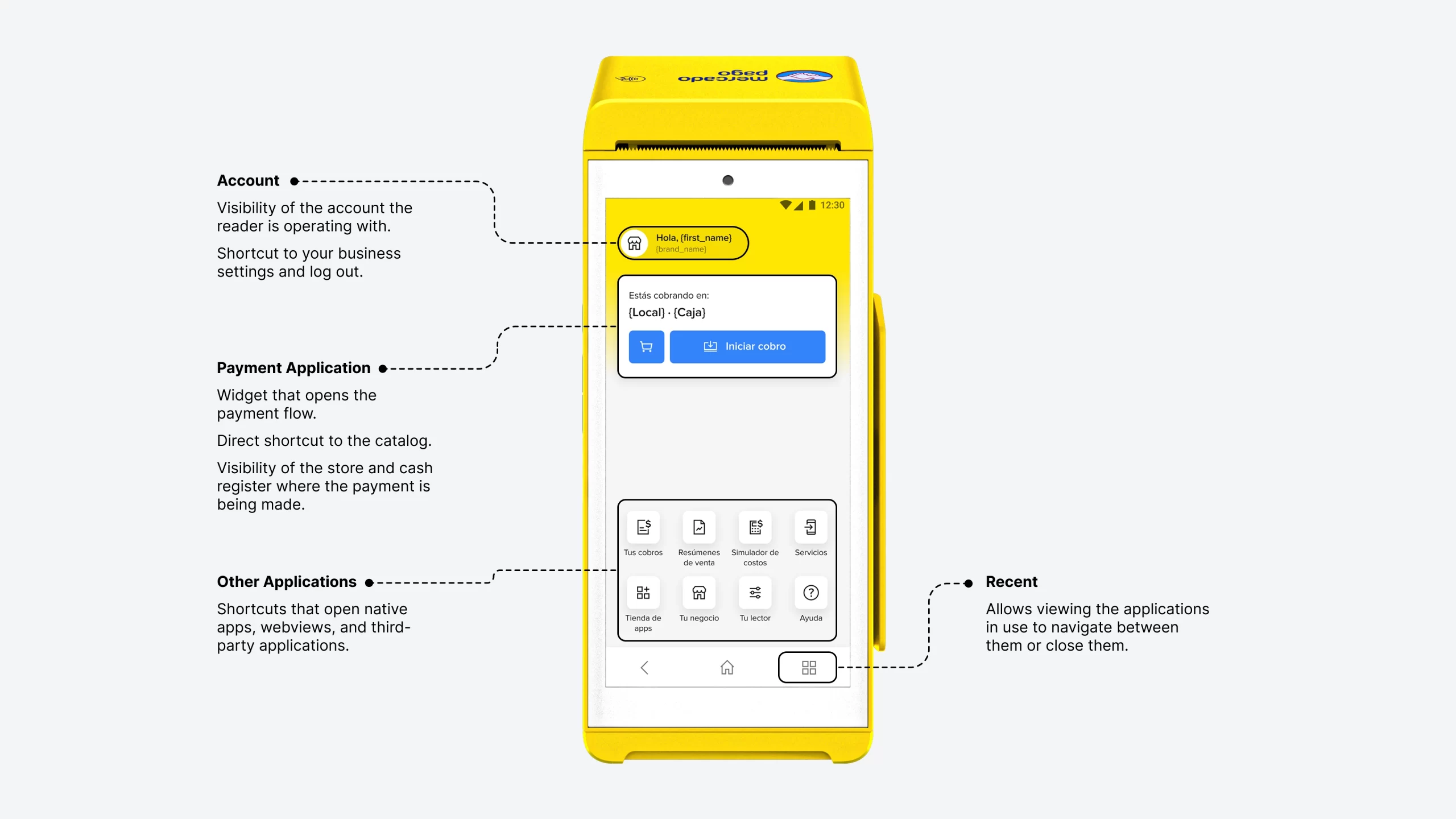
Launcher would not be just a home screen, it would become a System Operations Hub.
The structure was organized into strategic modules:
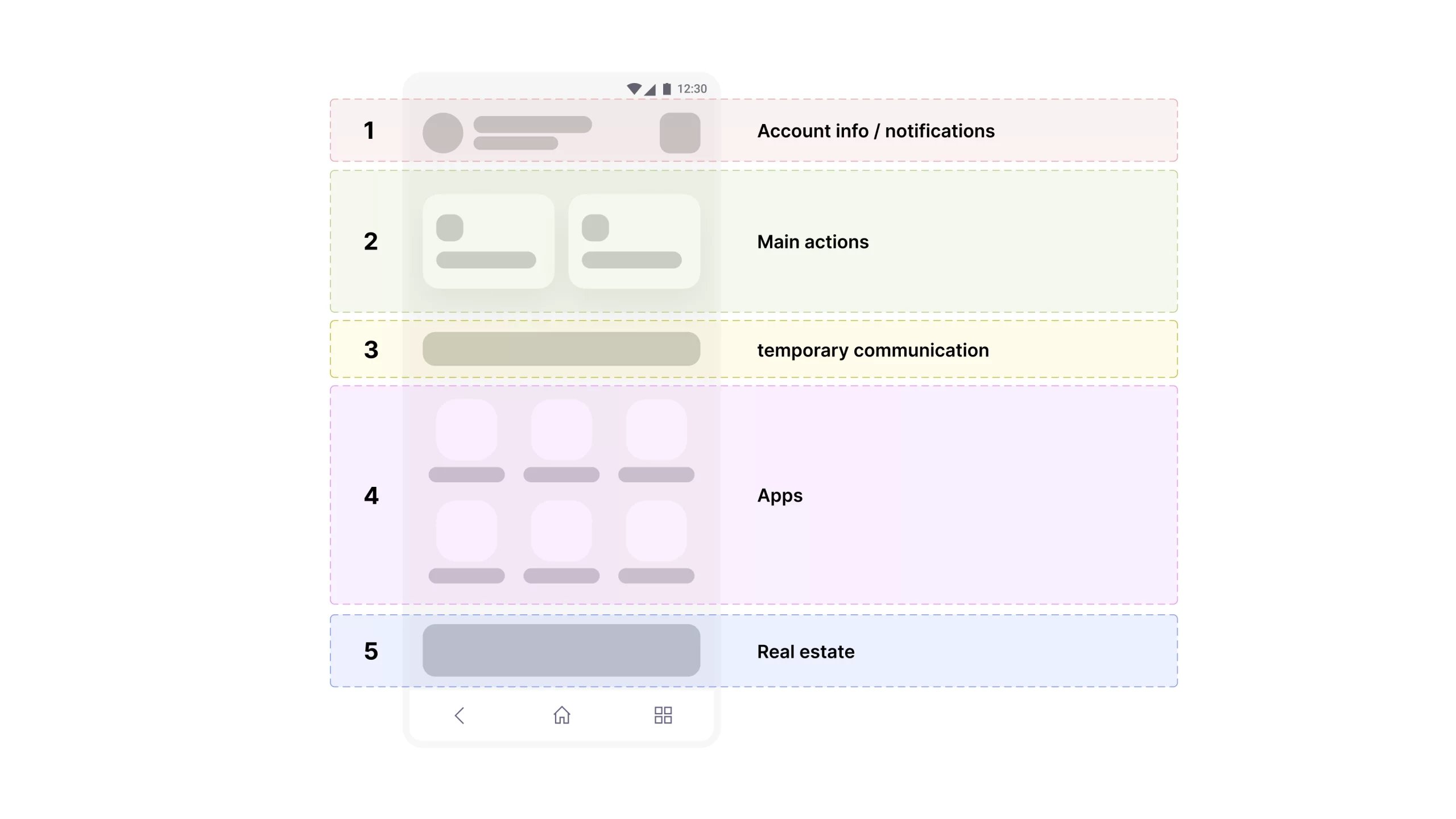
To support strategic decisions, we ran validation at scale.
These insights were instrumental in aligning stakeholders and justifying architectural adjustments.
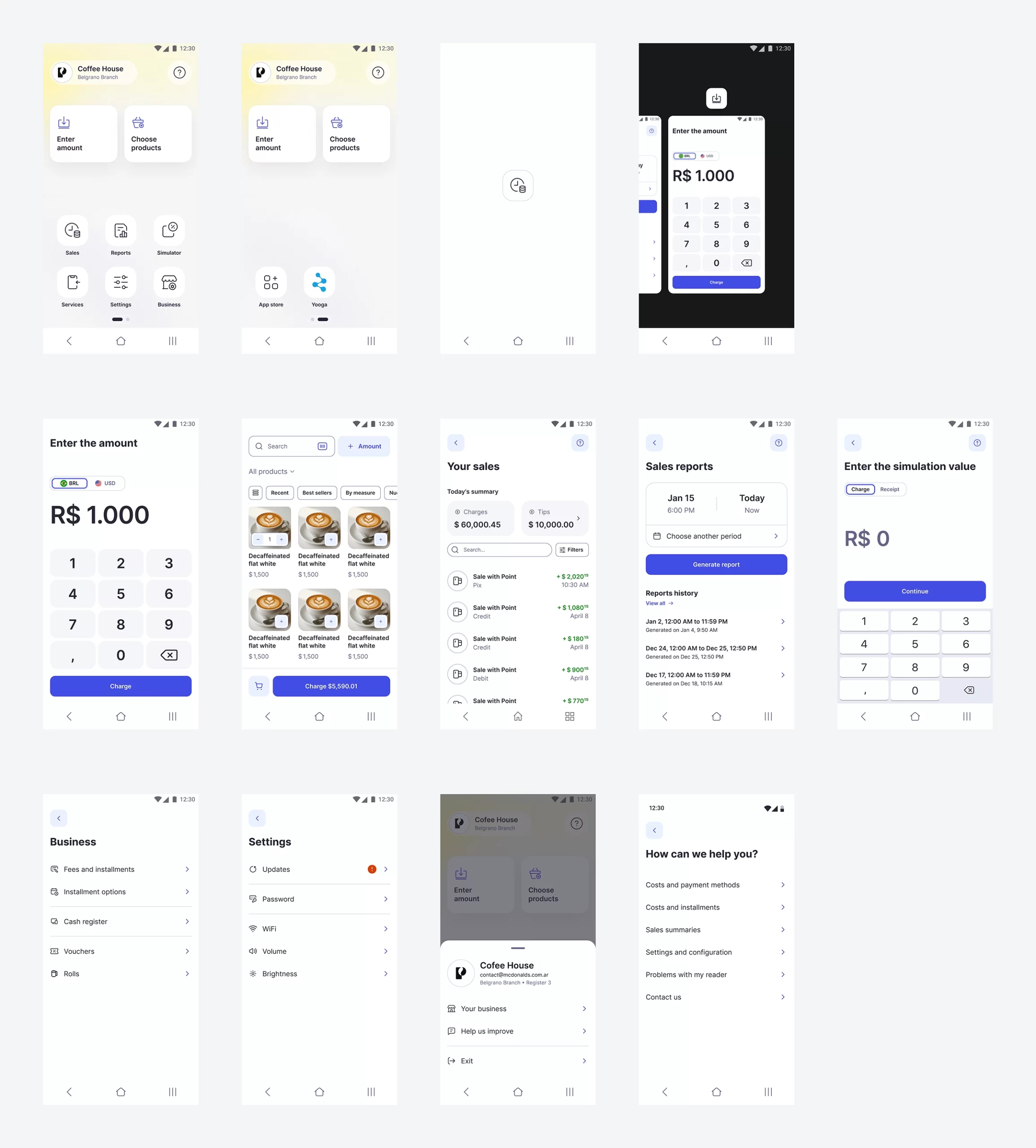
The solution transformed the device from a payment tool into a business management terminal.
Modular Launcher
The monolith was broken into independent micro-apps (Reports, Simulator, Settings, Help), enabling faster transitions and reducing perceived loading time.
Smart Navbar
We adopted Android’s native navigation paradigm, adapted to the payment context, allowing users to switch tasks without losing flow.
Transition Onboarding
Because the structural change was significant, I designed a guided onboarding flow to prevent productivity drop during migration.
The calculator was no longer the home.
Launcher became the orchestration layer of the system.
To ensure long-term scalability, I created the Smart POS Design Guideline, documenting navigation standards, unified error states, and device behavior patterns.
This enabled other design teams to build new Smart apps autonomously – while maintaining consistency.
Launcher became both a technical and cultural foundation for future growth.
The structural change was not only accepted, it drove measurable results.
Launcher did more than reorganize the interface.
It changed behavior, perception of quality, and the product’s technical foundation.